
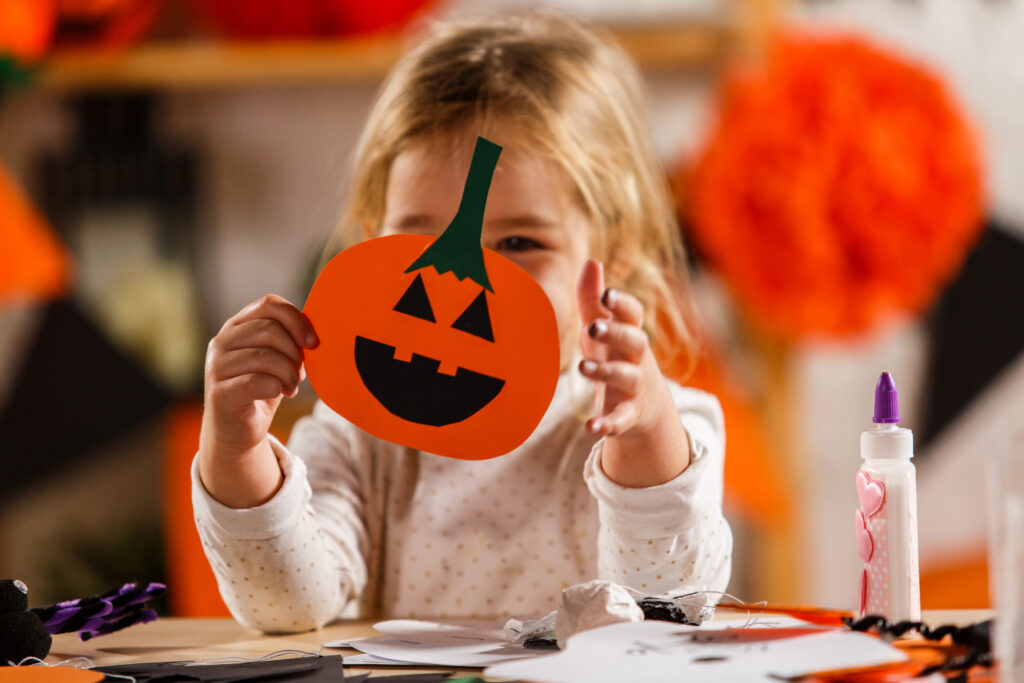
October is here, bringing colorful leaves, pumpkin patches, crisp autumn days, and plenty of opportunities for children to explore the world around them!
At Discovery Point, we love turning the excitement of the season into meaningful learning experiences that encourage curiosity, creativity, and discovery.
Fall is about more than costumes and pumpkins. It is also a wonderful time for children to build early math skills, explore science, strengthen their fine motor skills, and develop their imaginations through hands-on activities.
Looking for ways to bring the magic of October into your home? Here are five fun, educational activities you can enjoy with your child this fall!
1. Pumpkin Exploration: Little Scientists at Work!
Pumpkins are the perfect tools for introducing young children to science. Their different sizes, textures, colors, and seeds offer plenty of opportunities for hands-on discovery.
Try this at home: Place a small pumpkin on a table and invite your child to observe it. Ask questions such as, “What do you notice about the pumpkin?” “Does it feel smooth or bumpy?” and “Do you think a big pumpkin is heavier than a small one?”
For older children, take the exploration a step further by counting pumpkin seeds, measuring the pumpkin’s circumference, or making predictions about whether different objects will sink or float.
What children learn: Observation, early science concepts, counting, measurement, vocabulary, and critical thinking.
Activity resource: Pumpkin Fun: Safe, Tasty, and Educational — NAEYC
2. Leaf Collecting and Nature Art
Have you noticed the beautiful colors of autumn? A simple nature walk can become an exciting learning adventure!
Head outside with your child and collect a few fallen leaves of different shapes, sizes, and colors. Once you return home, sort the leaves into groups or use them to create a colorful fall collage.
You can also place a leaf underneath a sheet of paper and gently rub a crayon over the paper to reveal its natural shape and texture.
What children learn: Color recognition, sorting, comparing, observation, creativity, and fine motor development.
Activity resource: Fall Activities and Leaf Art Ideas — Education.com
Parent tip: Let your child lead the exploration! Ask what they notice about each leaf and encourage them to describe their discoveries in their own words.
3. Pumpkin Patch Math: Count, Sort, and Compare
October is a great time to make math fun using familiar fall objects. You don’t need worksheets or fancy materials to help your child practice important early math skills.
Try this at home: Gather small toy pumpkins, large picture cards, or other fall-themed objects. Invite your child to count them, sort them by color, or arrange them from smallest to largest.
For preschoolers, you might ask, “How many pumpkins do we have?” or “Which group has more?” School-age children can practice addition, subtraction, or simple measurement challenges.
What children learn: Number recognition, counting, patterns, classification, comparing quantities, and problem-solving.
Activity resource: Autumn More or Less — Education.com
Remember, everyday moments are learning opportunities! Counting pumpkins at the grocery store or comparing apples at a farmers’ market can help children connect classroom concepts to real life.
4. Spooky Sensory Play
Sensory activities allow children to explore the world through touch, sight, smell, and sound. With a few simple materials, you can create an October-themed sensory experience that encourages imagination and discovery.
Try this at home: Fill a shallow container with age-appropriate fall materials, such as large toy pumpkins, fabric leaves, scoops, and cups. Invite your child to scoop, sort, fill, and empty the containers while exploring the different textures.
For older preschoolers, try making orange play dough and using fall-themed cookie cutters to create pumpkins, leaves, and silly Halloween characters.
What children learn: Sensory awareness, hand-eye coordination, fine motor skills, language development, and imaginative play.
Activity resource: Make Halloween Fun, Not Frightening! — PBS KIDS for Parents
Safety reminder: Choose materials appropriate for your child’s age and supervise closely. Avoid small objects and loose sensory materials for children who may put items in their mouths. Never leave infants unattended with sensory materials.
5. Halloween Storytime and Pretend Play
Halloween can be a wonderful opportunity to encourage a love of reading, storytelling, and creative expression. Books help children develop language skills, understand emotions, and use their imaginations.
Try this at home: Choose an age-appropriate fall or Halloween story and read it together. Ask your child what they think might happen next, how a character feels, or which part of the story they enjoyed most.
After reading, encourage your child to act out the story, create simple paper-bag puppets, or invent a friendly Halloween character of their own.
For children who find spooky themes overwhelming, focus on friendly characters, colorful costumes, pumpkins, and silly stories instead.
What children learn: Listening comprehension, vocabulary, emotional awareness, creativity, communication, and social skills.
Activity resource: Make Halloween Fun, Not Frightening! — PBS KIDS for Parents
Learning Happens Through Play
One of the best things about early childhood is that learning can happen anywhere! Whether children are counting leaves, investigating pumpkins, creating fall artwork, or sharing a favorite story, each experience helps them develop skills they will continue building as they grow.
At Discovery Point, we believe in creating opportunities for children to explore, ask questions, make discoveries, and develop a lifelong love of learning. Every season brings something new to discover, and October is full of wonderful possibilities!
